
AAA RPL Course
Flight Training Sydney – Learn to Fly – AAA Recreational Pilot Licence Course
 For trainee pilots serious about safety and standards.

Training safe, proficient pilots is a serious business, but that doesn’t mean you can’t have fun along the way! Not only will you loop and roll on your first lesson, during the course you will learn to take-off and land, to perform basic aerobatics, to spin and recover and to effectively recognise and respond to emergency situations. Learning these skills takes time, dedication and good instruction. Getting this process right the first time is essential when you learn to fly. Flying, like the sea, is unforgiving of the inattentive or foolish!
The Australian Aerobatic Academy’s Recreational Pilot Licence (RPL) syllabus is NOT a minimum time, minimum cost or minimum standard learn-to-fly course. It is a comprehensive course which goes beyond the minimum CASA requirements to provide you with superior aircraft handling skills. These skills will stay with you whether you choose to be an airline pilot, fly recreationally for fun, or enjoy taking your family and friends away for a weekend trip as a private pilot.
To see just how much more you get for your money with a AAA RPL course, please look at this document: AAA RPL Syllabus Comparison.
A pilot more confident and capable in the airborne environment has a greater capacity for good aeronautical decision-making, which means a safer, more proficient aviator. If your flight training is limited to the narrow envelope of the “air transport” environment, unnecessary limitations may be formed as well as an underlying fear of situations that cannot be adequately or safely explored in “standard” training aircraft incapable of basic aerobatic flight. When basic aerobatics, spinning, and upset prevention & recovery training is combined as an integral part of a learn-to-fly course, the result is a pilot fully aware of an aircraft’s capability in flight. This flight training method has been used for decades by defence forces worldwide – why should civilian pilots not also benefit from this style of training? IT WORKS!
Don’t just take our word for it… Former Sydney Aerobatic School founder & CFI Noel Kruse, author of the “Fly Better” series of books, endorses the Academy’s training methods and standards in this document. Veteran US aerobatic pilot, airshow performer and flight instructor Patty Wagstaff has written a recent article on the benefits of the Academy’s style of training: Upset Recovery Vs. Aerobatics – Plane And Pilot Magazine.
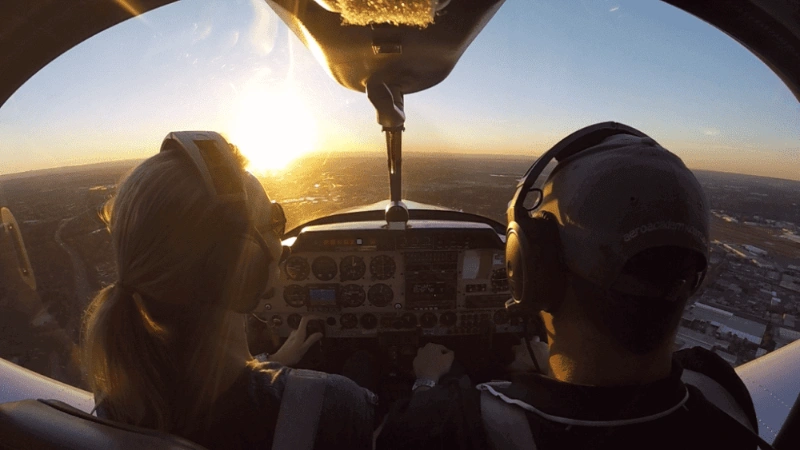
The Australian Aerobatic Academy prides itself on the standard of its instruction, as well as its personalised service and tuition. Academy instructors are experienced career instructors whose role is more of a “personal trainer” and “mentor” rather than a newly-qualified instructor trained to a minimum standard with limited operational experience. As we only employ a small number of dedicated professionals, we can guarantee the personalised service and consistency of training that larger organisations may not be able to provide.
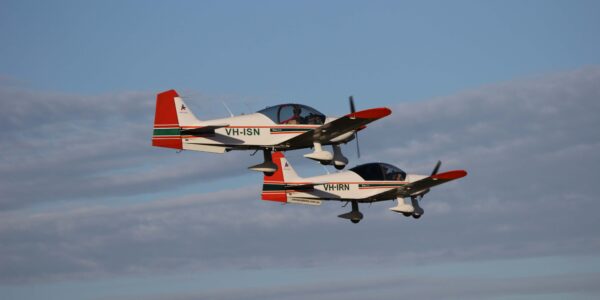
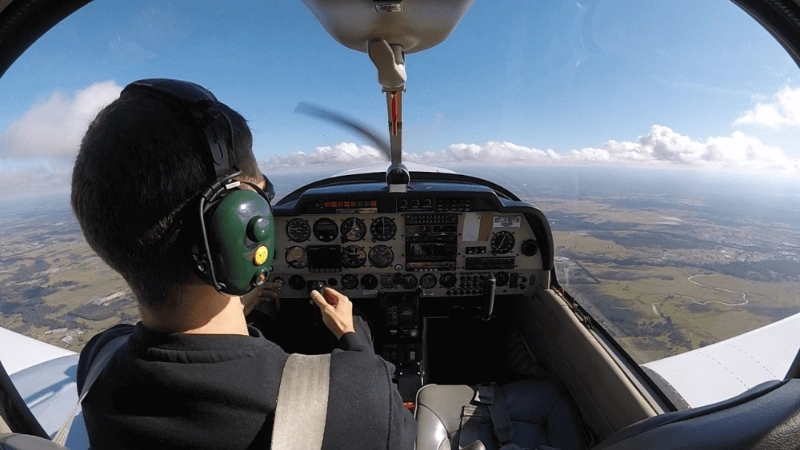
All RPL flying lessons are conducted in the Robin 2160 – a high performance dedicated training aircraft capable of aerobatic flight. Your choice of initial training aircraft is very important. Many aircraft used for training today do not have the capability to allow practice in using the full aerodynamic envelope, leaving a gap in knowledge and experience for new pilots. It is for this reason AAA use only fully aerobatic aircraft for our initial training courses. The Robin has a cruise speed of 120 kts (215 km/h), and climb rate of 1000 ft/min. Compare this to the 40 year-old Cessna 152 or the newer Light Sport Aircraft used by other flight training schools – which have a cruise speed of around 90 kts (170 km/h) and a climb rate of 650 ft/min. This means more time is spent in the training area concentrating on learning the required skills, rather than the transit to and from the airport. Higher performance means more practice in take-offs and landings per session, which means more practice for every dollar spent!
Learning to fly in Sydney – Choose Camden Airport!
-
Shorter Transit Times to Training Areas: At Bankstown, a significant portion of your precious flight time—and budget—will be eaten up just taxiing, queuing for runways, and transiting out of the busy metropolitan zone before you even reach your training area. At Camden, you are practically on the doorstep of your training areas, meaning more actual stick time per lesson.
-
A Quieter, Less Congested Aerodrome: Camden offers a more relaxed, focused environment away from the heavy commercial congestion of larger airports. With less IFR traffic and fewer holding delays, you spend less time waiting and more time flying, practicing take-offs and landings, and mastering aircraft handling.
-
The Best of Both Worlds with Controlled Airspace: While Camden provides a calmer learning environment, it still features tower-controlled airspace. This means you get the best of both worlds: a low-stress aerodrome for initial skill-building coupled with real-world radio communications and air traffic control experience essential for your piloting anywhere.
-
More Economical Training: Because you aren’t wasting expensive engine hours idling in taxi queues or burning fuel on lengthy transits out of control zones, your overall training costs can be significantly reduced. Camden lets you stretch your training budget much further!
-
Fewer Operational Delays: Less airspace congestion translates directly to fewer flow-control delays, giving you greater scheduling reliability and less impact on the job you need to make the money to fly!
When ultimately making a decision on which school you choose to learn to fly with, consider this:
Learning to fly is a large commitment in time, finances and personal effort, and one must be ultimately satisfied with the ability of the selected flight training organisation to provide the level of service & quality of the qualification they purport to provide…
…What is your life, and the lives of your future passengers worth to you?
Learn it right from the beginning. Learn from the aircraft handling experts at the Australian Aerobatic Academy!
You may also like...
-
Formation Flying Course
More DetailsWhat’s better than just flying? Flying in FORMATION!Who hasn’t been thrilled at the sight of precision formation flying teams as they move across the sky, seemingly as if they were tied together? There’s no magic trick—just skill, practice and discipline!
The AAA Formation Flying course is designed to teach licensed pilots the techniques, skills and knowledge required to conduct safe, proficient formation flight.
The course begins with a tutorial on the fundamentals of formation flight, including the all-important pre-flight briefing, the roles of the leader and wingman and techniques for staying safely “on the wing.”
The flying component includes:
- Station keeping and station changes;
- Manoeuvring as a formation;
- Break-away and re-join procedures; and
- Formation take-offs and landings.
The AAA Formation Flying Course is great for pilots wanting to up-skill their RPL or PPL and will refine both your “stick and rudder” skills and airborne situational awareness to a degree unparalleled in single-aircraft flight.
Completion of the course provides a CASR Part 61 Formation Flying endorsement.
Please note: We recommend you have a formation partner when commencing this course, however, if you do not have one there are options available! Training may also be conducted in your own aircraft. Please contact us to discuss.
-
UPRT Course
More DetailsDon’t become just another aviation safety statistic! Learn the skills to SURVIVE!Are you…..
- Uncomfortable in slow speed turning flight?
- Apprehensive near the stall or lose excessive height in recovery?
- Concerned of your chances of survival in an engine failure scenario?
- Unaware of the exact limits of your aircraft’s performance capability?
- Afraid to “cross controls” for fear of a spin?
- Doubtful about your ability to cope with a unplanned upset or departure from the intended flight path, speed or attitude?
- Unable to recognise an impending stall without reference to the ASI?
If the answer is “YES” to any of these questions…
YOU NEED THIS COURSE!
The second-highest cause of accidents in aircraft is loss-of-control according to continuing ATSB statistics. The primary cause remains “collision with terrain” – mostly as a result of losing control!
The International Civil Aviation Organisation (ICAO), now realising the increasing impact of loss of control in-flight (LOC-I) events worldwide, is committed to “...reducing LOC-I <as> a global aviation safety priority“(sic.) by mandating UPRT for commercial pilots.
This doesn’t exclude the recreational or private pilot from increasing their skills. ALL pilots need to understand and control the environment in which they operate! UPRT provides an additional layer of protection against unplanned loss-of-control events.
Too many people are needlessly killed in aeroplane accidents because of a lack of understanding, recognition or recovery from impending or inadvertent loss-of-control! Don’t let THIS happen to you…
The Academy’s UPRT course is a defensive driving course for pilots! Our course consists of 5 lessons, each designed to increase your flight safety by providing a greater awareness of aircraft capability and confidence in the ability to recognise, avoid and recover if necessary from unexpected adverse aircraft control events or “upsets.”
Our comprehensive UPRT course includes:
- Confident and accurate flight path control and energy management;
- Nose high and nose low upset awareness and recovery;
- Advanced stall recognition and recovery;
- Stall / spin awareness and prevention;
- Fully-developed & incipient spin recovery; and
- Emergency scenario training.
Skills are learned in a controlled environment with strict performance parameters to maintain safety. Some aerobatic manoeuvres are used to demonstrate the full capability of an aircraft, as well as expose you to the likely adverse effects of incorrect or mishandled recovery techniques. This is backed up with comprehensive pre-flight briefings to gain greater knowledge of HOW and WHY pilots lose control.
Due to the condensed nature of the course, the aerobatic manoeuvres and spinning conducted are not available for endorsement. However, credit will be given toward the successful completion of an AAA Aerobatic Course based on competency if desired.
You don’t need to worry about how to fly a new aircraft type or learn local airport procedures! Our instructors will take care of that for you so you can concentrate on learning the techniques which may ultimately save your life!
If you are an Experimental aircraft owner, you may complete the course in YOUR aircraft! (subject to assessment and suitability) Our instructors are experienced in many different types of light aircraft including the popular Vans RV series. If you choose to use your aircraft, please note that some aspects of the course can only be completed in an aircraft with aerobatic capability. However, our instructors are available upon completion of the course to show you how your newly-learned skills apply in your regular aircraft within it’s limitations.
Don’t wait until it’s too late! Learn the Skills you need to FLY WITH COMPLETE CONFIDENCE TODAY!
UPRT Course
There’s no doubt that watching movies like Top Gun has inspired people to pursue a career in aviation. However, it requires specific skills to learn to become the next Goose or Maverick. When you need to improve your flying skills, you can enrol in one of several courses that the Australian Aerobatic Academy offers, including the UPRT course. Accidents and errors can occur during a flight, so you must have the necessary knowledge and skills to navigate these scenarios by receiving Upset Prevention and Recovery Training.
What Does Our UPRT Course Involve?
Instead of becoming another aviation statistic, you need to go through this course to help you learn critical skills that can lead to your survival in an emergency. According to the Australian Transport Safety Bureau, the second-highest cause of accidents in an aircraft is loss of control. UPRT has become an essential aspect of being a pilot, and here’s what you can expect from the course.
- During the five-lesson course, you will learn skills to increase your flight safety and become more aware of the aircraft’s capabilities. By understanding the tools in front of you, you will have the confidence to recognise, avoid and recover when the aircraft is experiencing adverse control events.
- Other elements you will gain from the course include accurate flight path control, energy management; advanced stall recognition and recovery; spin or stall awareness and prevention, nose high and nose low upset awareness and recovery, and emergency training.
- Our instructors will use aerobatic moves to demonstrate an aircraft’s ability and expose you to the negative effects of mishandling recovery techniques. We conduct these lessons in a controlled space with strict parameters for your protection.
We believe that a pilot’s training is the most essential part of their career as this is the time for us to shape your habits, skills, and attitude. Remember that when you have a heap of knowledge and training to depend on, you’re ready to acknowledge abnormal situations and can provide solutions faster when you’ve had the training.